National Security and Foreign Affairs
For more information concerning work and views related to National Security and Foreign Affairs, please contact our office.
More on National Security and Foreign Affairs
WASHINGTON – Today, Congressman Ted W. Lieu (D-Los Angeles County) issued the following statement after the New York Times reported that President Donald J. Trump ordered his chief of staff to grant his son-in-law Jared Kushner a top-secret security clearance. The story alleges that the President overruled concerns from intelligence officials and the White House's General Counsel.
WASHINGTON - Today, Congressman Ted W. Lieu (D-Los Angeles County) issued the following statement after President Trump's summit with North Korea's Leader Kim Jong Un did not result in a peace agreement.
"If reports are true regarding the North Korean demands, it was right for the President to walk away rather than strike a bad deal. We should want to see our nation succeed on the international stage, and we should never relish in the failure to reach a peace agreement.
WASHINGTON - On Friday, Congressman Ted W. Lieu (D-Los Angeles County) and Congresswoman Kathleen Rice (D-NY) sent a letter to NRA Chief Executive Officer Wayne LaPierre, asking about a 2015 trip that NRA associates took to Moscow, Russia in 2015. The trip has come under scrutiny because it further complicates ties between the NRA and Russia.
In the letter, the Members write:
Dear Mr. LaPierre:
On Wednesday, the House of Representatives issued a stinging rebuke of the White House's holding pattern in support of the Saudi coalition in Yemen. The vote was the culmination of multiple years of efforts by realists on Capitol Hill and their allies. House Joint Resolution 37 demands the removal U.S. Armed Forces from hostilities in or affecting Yemen within a month unless: Congress authorizes a later date, or issues a declaration of war, or specifically authorizes military force. The vote was not close: 248-177.
WASHINGTON - Today, Congressman Ted W. Lieu (D-Los Angeles County) issued the following statement on the passage of the House's resolution to end U.S. support for the war in Yemen.
WASHINGTON - Today Congressman Ted W. Lieu (D-Los Angeles County) issued the following statement on Sens.
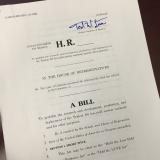
WASHINGTON - Today, Congressman Ted W. Lieu (D-Los Angeles County), Senator Ed Markey (D-MA), House Armed Services Chairman Adam Smith (D-WA), Congressman John Garamendi (D-CA), Congressman Earl Blumenauer (D-OR), Congresswoman Barbara Lee (D-CA) and Congresswoman Jan Schakowsky (D-IL) announced the reintroduction of the bicameral Hold the LYNE (Low-Yield Nuclear Explosive)Act. The legislation would prohibit the research, development, production and deployment of a low-yield nuclear warheads for submarine-launched ballistic missiles.
WASHINGTON – Today, Congressman Ted W. Lieu (D-Los Angeles County) issued the following statement congratulating Elan Carr on his appointment as the United States Envoy to Monitor and Combat Anti-Semitism.
WASHINGTON – Today, Congressman Ted W. Lieu (D-Los Angeles County), a member of the House Foreign Affairs Committee, issued the following statement after the Trump Administration announced it would suspend the Intermediate-Range Nuclear Forces Treaty with Russia. The treaty, which was ratified in 1987, places limits on intermediate-range nuclear missile development by Russia and the U.S.
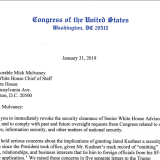
WASHINGTON – Today, Reps. Ted Lieu (D-Los Angeles County) and Don Beyer (D-VA) wrote to White House Acting Chief of Staff Mick Mulvaney seeking the immediate revocation of Senior White House Adviser Jared Kushner's security clearance.