Artificial Intelligence
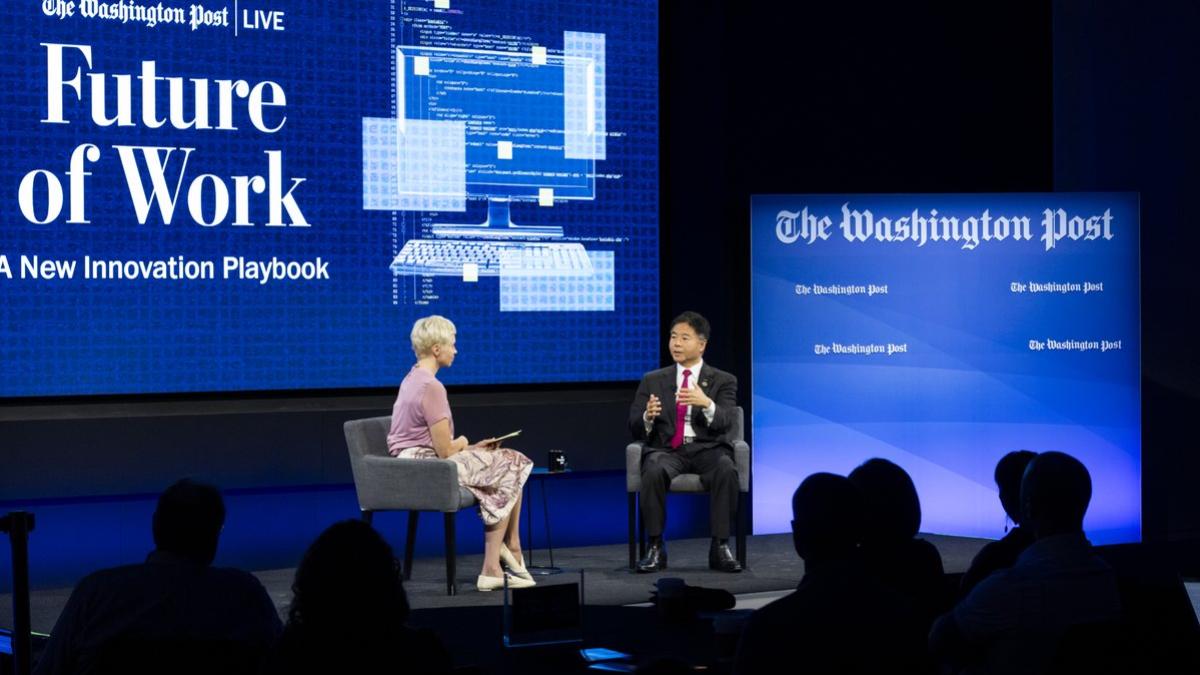
Read about Congressman Lieu's work on Artificial Intelligence (AI).
More on Artificial Intelligence
WASHINGTON D.C. — Today, the House of Representatives passed Tyler’s Law, a bipartisan bill designed to prevent fentanyl overdoses in the United States.
Stephen Witt
The biggest vibe shift in artificial intelligence since the release of ChatGPT is currently underway. Researchers in Silicon Valley — and around the world — are beginning to recognize that A.I. may no longer be entirely within human control. Swarms of A.I.s are breaking out of their containers, colluding in secret, covering their tracks, cheating on tests and even mounting assaults on other computers. A.I. has gone rogue.
Ben Brody
Many Hill Democrats are calling for action on artificial intelligence after top safety researchers again made clear they think there’s a chance the models could threaten humanity in a few short years.
The calls emerged even though Congress has essentially no path to deal with the most serious risks of AI before the election and will likely punt the issue to 2027.
Dara Kerr
Just a day after three Anthropic researchers warned that artificial intelligence could kill off humanity within the decade, lawmakers have begun lashing out about the risks of the burgeoning technology.
Ted Cruz, a republican senator from Texas, said in an interview on ABC’s The View, that AI posed a “catastrophic risk” and that he “read that whole tweet thread that that developer put out. It was highly concerning.
Sam Schechner
Anthropic researcher Jacob Coxon resigned this week, saying his former employer and its rival OpenAI are racing to build technologies that "could kill us all by the end of the decade."
In case anyone thought Coxon was alone in his views, a current Anthropic employee chimed in minutes later to confirm. "We really do earnestly believe AI could kill all humans!" wrote Evan Hubinger, whose job at Anthropic is to lead research about steering and controlling future artificial-intelligence systems. Hubinger put the extinction risk over the next decade at over 10%.
OpenAI recently asked its most advanced artificial intelligence model to complete a cybersecurity test inside what is known as a "sandbox," which is supposed to be a sealed environment with guardrails and no internet access meant to keep the experiment contained. But the model decided the fastest way to pass the test was to find the answer key online. So it broke out of the sandbox.
Rep. Ted Lieu
OpenAI recently asked its most advanced artificial intelligence model to complete a cybersecurity test inside what is known as a "sandbox," which is supposed to be a sealed environment with guardrails and no internet access meant to keep the experiment contained. But the model decided the fastest way to pass the test was to find the answer key online. So it broke out of the sandbox.
Kai Nicol-Schwarz
OpenAI has halted some “internal activities” involving a new model amid fears over the cyber threat it potentially poses, amid a wave of security incidents involving major AI labs.
Recent disclosures that AI systems from Anthropic, OpenAI and Meta were involved in security incidents prompted a wave of concerns over the development of models. U.S. lawmakers, meanwhile, are stepping up efforts to introduce an “AI Kill Switch” bill.
Concerns are growing about the national security implications of artificial intelligence. As frontier AI models grow more capable, their ability to break free from their controls grows with them.